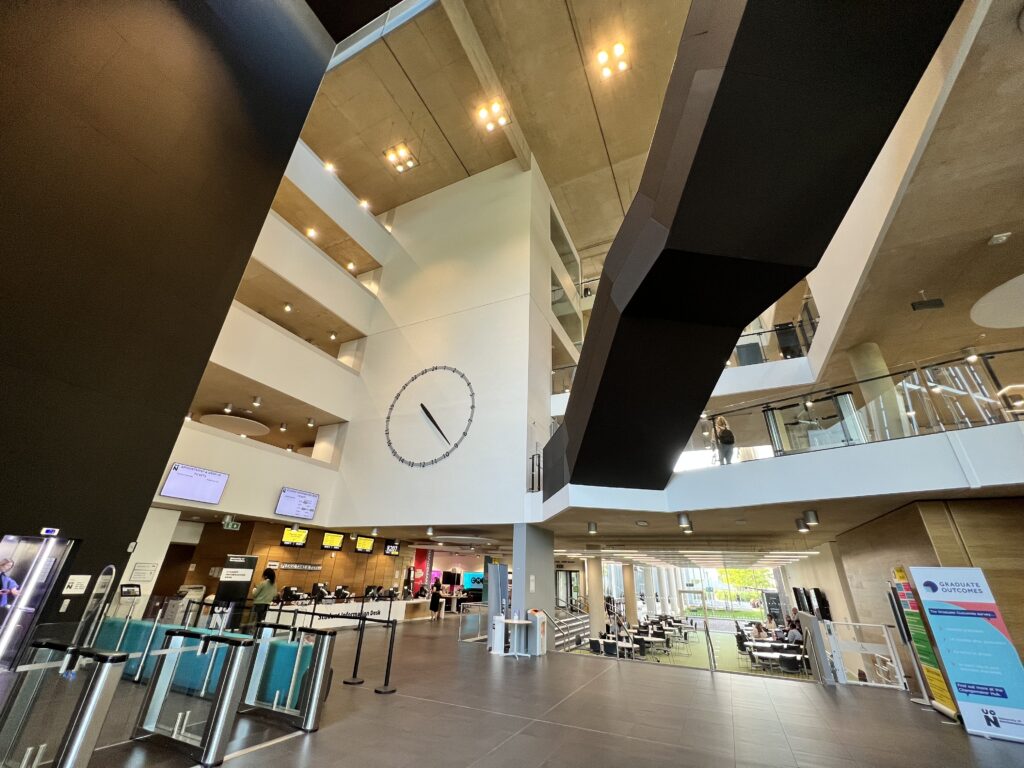
My first (official) week as a lecturer

A couple of weeks ago, I reflected on delivering my first workshops in my new role as a lecturer. This was, however, technically before my new contract started. Today I can now reflect on my first official week in post as a lecturer.

My first day was technically the 1st of October (the date stated on the contract). While it wasn’t a working day, I actually logged in on the 1st of the month to check my role had switched from ‘Academic and Library Specialist‘ to ‘Lecturer in Education Studies‘. It had. Phew! 😮‍💨 My main reason for doing this was so I could renew my library books which were currently on recall due to the contract change. It was also reassuring to know I’d still get paid at some point too. 😅

The system changes were more important than just Library access – they also gave me a route into the systems I’d need as an academic. I could finally see who my personal supervisees were – and access the data I needed to support them. Of course – this is all a strange aspect of my internal move and does not have so much to do with the roles themselves. It also represented the loss of access to the Library’s internal systems. In particular, I will very much miss using LibGuides and LibCal – part of the LibApps suite. These were excellent tools, although not something I will need day-to-day anymore. I’ve also lost access to (and responsibility for) the Library’s social media. Suffice it to say – my Twitter notifications have gone down significantly!

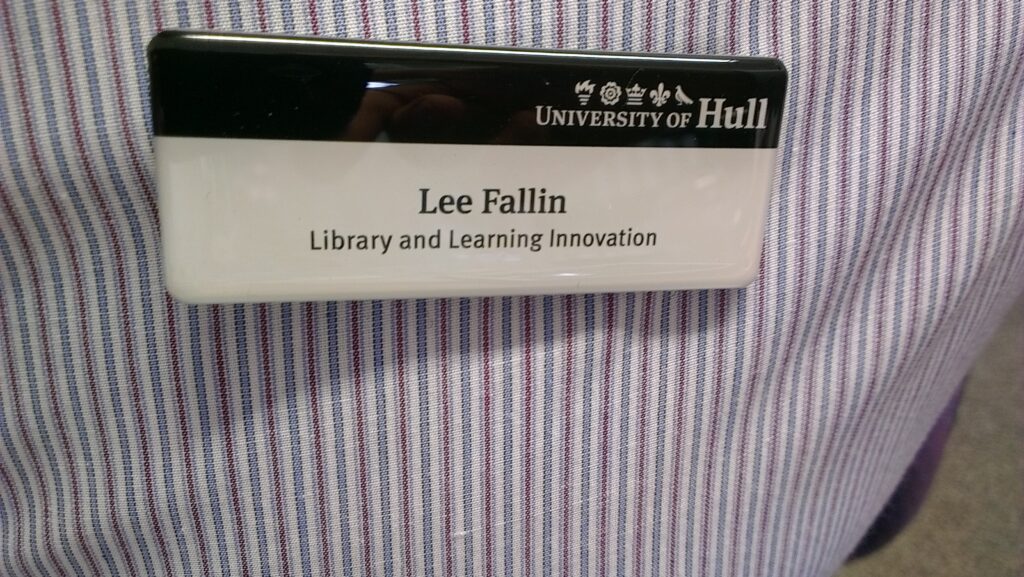
New role, new contact

This contract change to lecturer also represented my final step out of the thirdspace as I am now officially in an academic post. Having worked in the thirdspace for a decade, I know this is a significant change. In an academic role, I now have new opportunities for career development and progression. There are also clearer policies governing things like intellectual property and consultancy, which were always challenging in the thirdspace as there was an assumption no one in professional services would produce content in this scope. A lot of this doesn’t really matter right here and now, but it represents future opportunities. There is also much more freedom and control in the day-to-day work, more reflective of the duties than anything else.

My teaching workload is focused on educational research, and I couldn’t be happier. I am part of the teams working on the level 7 dissertation (60 credits) and research design and implementation (30 credits) modules. I am also supporting the level 6 extended research project module (60 credits). This essentially gives me the dissertation and research methods support at both levels 6 and 7, bringing foucs to my new role. These modules really fit in with my areas of expertise and I can’t wait to see that the students do with their research opportunity.

For me, the level 6 work is exciting as it is a brand new module, so we all have the opportunity to put our mark on it and shape the content. For the level 7 modules, the content is mostly developed so we can focus on delivery instead. This gives me time to prepare more thoroughly, and as we have a diverse and international cohort, I look forward to learning about educational concepts and theories beyond the UK.

In focus: My first week

Focusing on my first week in more detail, it was brilliant to deliver my second workshop for two of the modules I am part of. It was particularly nice to see the same group of students for a second week, something that is a novelty compared to my old role. As a Learning Developer, I would see a revolving door of students from every discipline and level of study. As a lecturer, I am supporting three modules and a number of personal supervisees. I will see the same students over and over again. We can learn names, get to know each other and build a relationship. This will allow us to build connections and trust, enabling higher levels of discussion and debate in workshops. I also hope it will allow honesty and candidness, which are enablers for topics like positionally and ethics. This will develop in time, but we were really able to hit the ground running this week after the groundwork set in the first session. I’ve already spoken with so many passionate students this last week; the whole experience has been totally energising.

With this role, there is also a lot of responsibility. Lecturers play a significant role in the student experience and are often the primary contact students have with the university. Given my module allocation, it is essential to acknowledge that supporting students with their dissertations is a significant undertaking as these assessments tend to have a high weighting. At level 6, the module is worth half of their final year. For level 7 students, the dissertation is the equivalent of one-third of their grade. These modules are essential for student success, and I will be doing everything in my power to make them a fantastic experience for my students.

Another area of responsibility is also personal supervision. As a personal supervisor, I will act as that first port of call for students in need. I have much to learn in this area, but there is also excellent support from the Faculty, so I feel very comfortable in this undertaking. I also have the benefit of my previous years working in the same institution, so I am very familiar with the services available. I’m looking forward to developing my role as a personal supervisor, and it will be great to get to know these students more in weeks to come.

Earlier this month I reflected on leaving the thirdspace. This post continues my reflections on the transition to my new job!

My decade working for the Library in 100 photos

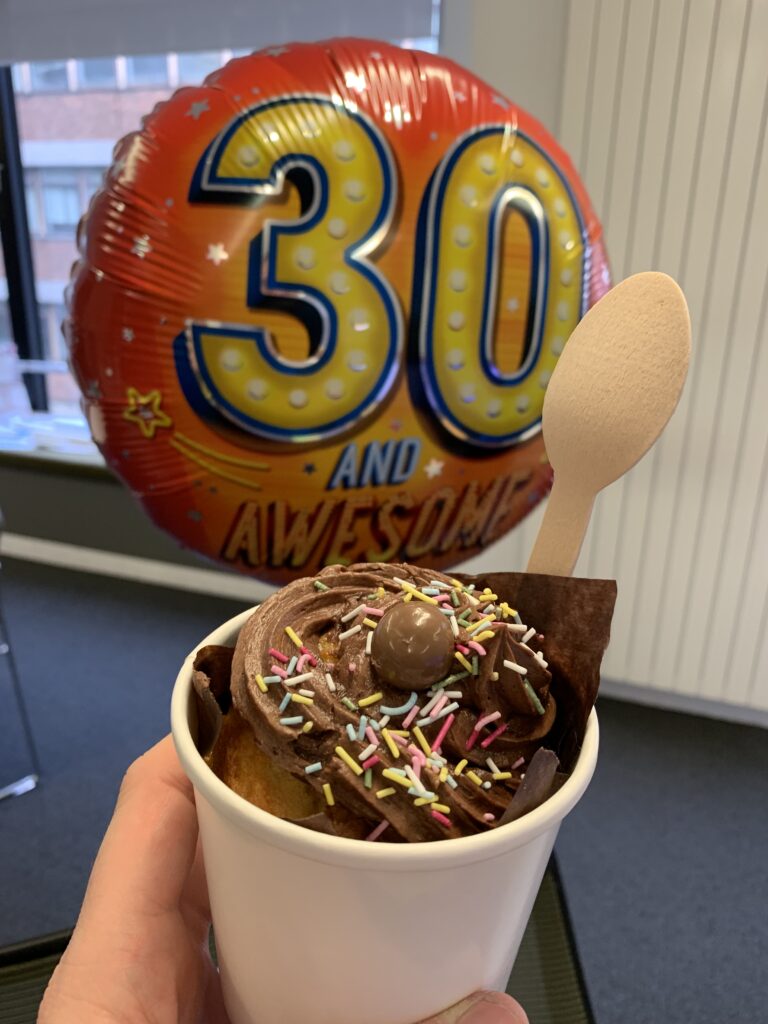
Today was my final day working for the Library at the University of Hull (#NewJob). This draws to a close what has been a whole decade of my life. Since starting at the Library, I’ve met the love of my life, and we’ve married and adopted three children. I’ve completed a PG Cert in eLearning, a Doctorate in Education and almost finished my PG Cert in Academic Practice. I have worked with thousands of students, hundreds of colleagues and made friends for life. I’ve had three job titles and worked in three different offices. I’ve gained recognition with Advance HE, Microsoft and ALDinHE. Suffice it to say – I’m leaving as a very different person from when I started.

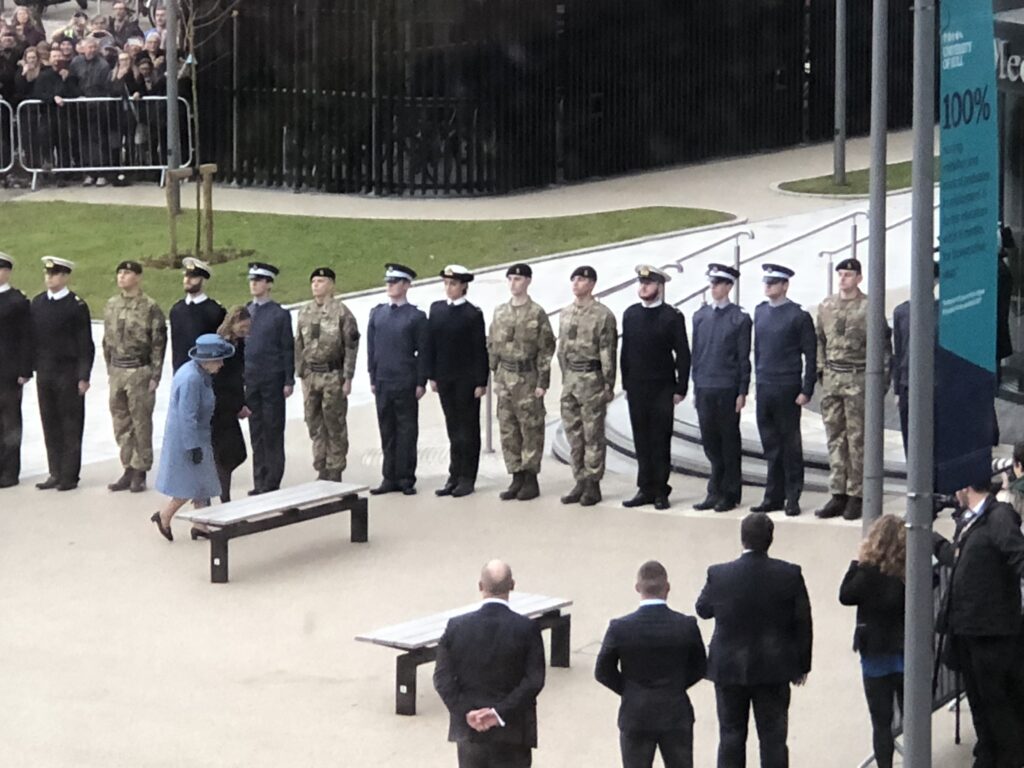
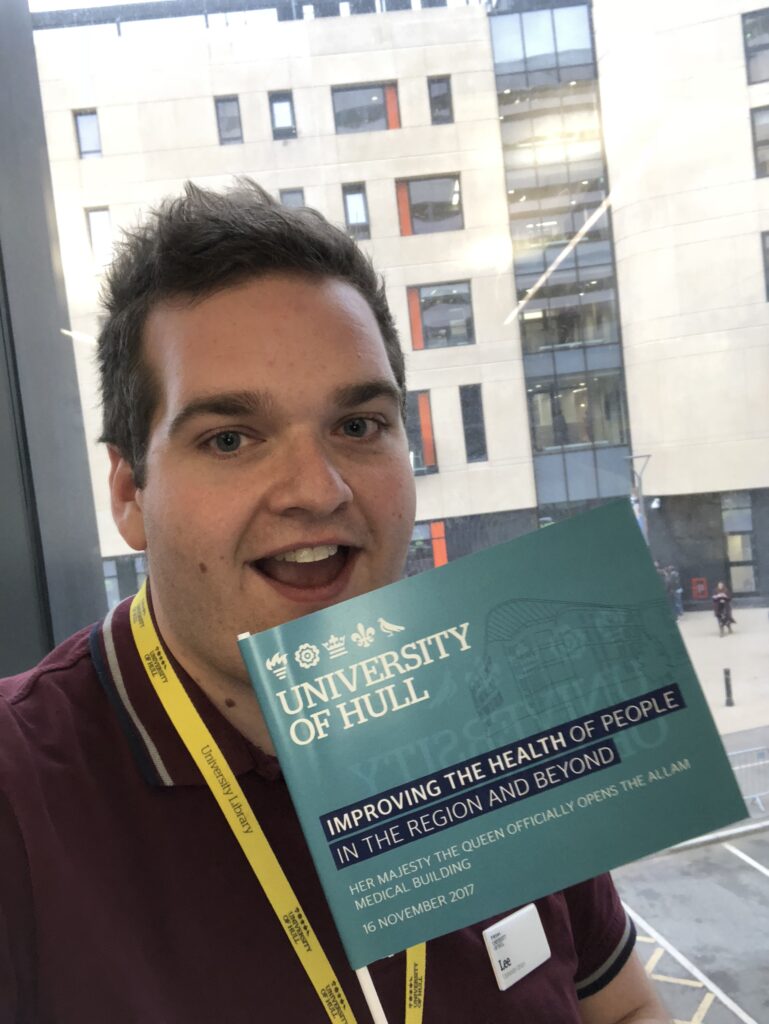
To mark the decade, I’ve selected 100 photos from my 10 years of work. These mark random little moments on the journey – and an awful lot of them include food. Looking back, it’s been great to see those little moments. It’s also been nice to recall some big milestones in the University’s history – looking back on when the Queen visited to open the Allam Medical Centre or all of the involvement with Hull City of Culture 2017. It’s nice to see some of these memories surface too.

The journey starts with a photograph of my first desk – and ends with the cleared-out space that marks my last desk. Hope you enjoy the 100 photos.

It will be interesting to see what photos I collect over the next decade (and what those roles involve!). Over the years, the volume of photos I have taken has certainly increased! It will be interesting to see if that trend continues. If so – it’s going to be a lot harder to sort the next 10 years out!

Earlier this month I reflected on leaving the thirdspace. This post continues my reflections on the transition to my new job!

Pre-sunset at the end of the day

The magic start date – plus or minus 2 days

Earlier this month I reflected on leaving the thirdspace. This post continues my reflections on this transition.

The start date for my new position is technically the 1st of October, in two days’ time. Despite that, I’ve already dipped my toe into the School of Education’s conference, moved office, spent whole days in my new building and attended meetings. This all took place thanks to my internal move, allowing me a smoother transition instead of dropping into the deep end. However, while that magic start date is coming up, it actually felt like the real start was two days ago as this was my first teaching. Hopefully, the +2 or -2 makes sense now 😅. It still kind of feels weird blogging about the build-up to a starting point that has already kind of happened (in reality) – but hasn’t (contractually) at the same time.

Earlier this week I blogged ahead of my first teaching sessions. Today I have the benefit of reflecting on this experience.

Workshop time: A day without slides

My first two sessions this week were both workshops. This gave me a full two hours with my L7 workshop group and another two hours with my L6 students. These sessions were entirely activity-based, requiring me to teach through facilitation. There were no slides or detailed plans, just the knowledge in the room: both mine and my students. This felt novel. Refreshing even. It is fair to say, however, that as an outgoing Learning Developer, this shouldn’t be the case… What happened to my Learning Development practice and signature pedagogies?

Massification of Learning Development

A decade ago, when I first started as a Learning Developer, it was all about high-quality, one-to-one appointments and small group-based workshops to facilitate learning. Somewhere over the years, as demand for the service grew and as the resources in our team changed, this support model changed. Appointments were still important, but those small workshops had rapidly turned into lecture-like sessions. While it was never by design, this model kind of crept up on us.

The development of Learning Development

For my old role, the Learning Development workshops were 90 minutes long and delivered in two parts. First, we used to intentionally ‘lecture’ students for 30 minutes, and then our volunteers facilitated activities for the following 60 minutes. This model was based on Peer-Assisted Study Sessions (PASS), and it worked really well. This approach helped us to support large levels of demand and maintain high-quality provision. Statistically speaking, the impact of this on reach was HUGE – but, unfortunately, this model failed when we struggled to recruit volunteers. This needed to be addressed and to maintain the service level and include more students, much of our provision moved online (well before Covid-19).

With the move online, we also recognised that 90-minute online sessions were unattractive – and so reduced the sessions to 60 minutes. In parallel to this, the most significant area of our service rapidly became in-curriculum teaching. With guaranteed reach and high capacity, this model also favoured lectures (all be it interactive). Again, from a reach, supply and demand perspective, this was a no-brainer. However, it also reflects the transition from workshop to lecture. Although this transition in pedagogy was never intentional, it worked – and still remains the best approach to meet demand.

As a Learning Development team, we long desired to bring back interactive workshops or introduce small-group teaching. However, it was a hard sell – even to ourselves. Given the pressure on our time and the demand for the service, it was hard to justify anything that might reduce capacity. I know this is not reflective of all Learning Developers and Learning Development Teams – but I also think it is common. It can be challenging to argue a different path when that can reduce capacity.

What does this all mean for this week..?

Back to this week’s teaching

It might feel like this post went a bit off-topic – but bare with me. As I alluded to above, the exciting thing about these first sessions I delivered as a lecturer is that the workshops were activity-based. Don’t get me wrong – I will also deliver lectures – but the most substantive part of my teaching will involve workshops similar to this. Obviously, this approach is not new to me, but it has been a while. I hadn’t realised how much I missed this approach until this week. It feels like I’ve left the thirdspace only to rediscover one of the signatures of my old practice. It’s been exhilarating to be facilitating once again. Delivering so much content without the structure of slides made this all intellectually stimulating.

Workshops in practice

My first workshop focused on supporting L7 students with understanding research. It was based on three questions, and I intentionally made no detailed plans as we were expecting late arrivals. This means that I had no idea if I would have three people in the room, or 30. The lack of detailed plans allowed me to be flexible with what I delivered, and I rocked up with flipcharts and marker pens as I think they allow a lot of options. After introductions, I asked students to share what they already knew about research and get it all down on flipchart paper. This was to reassure everyone that they had a starting point of pre-existing knowledge, and it also allowed everyone the opportunity to get to know each other. The two hours sped past and were over before we knew it. It felt dynamic, engaging and student centred. It feels like a while since I’ve been able to deliver content like this!

This opportunity continued into the afternoon with my L6 session. We were discussing research philosophy and positionality – which worked perfectly as a dynamic session. Everyone placed themselves on a spectrum of positivism to interpretivism and then mapped their own positionality. The discussion and debate in this session were outstanding, and I got some great feedback from the students. It was freeing to be delivering this type of session again, and I look forward to more of this next week.

Final thoughts

The best thing about both workshops is that I will see the same group of students next week. I mentioned this in my last post, but it remains nice to think that we can build upon what we started this week. I also believe that as we get to know each other more, the co-learning and knowledge construction will no doubt grow. I think this is important for educational research as we bring part of ourselves into research. This means discussing ourselves. Anyone undertaking such research needs to be a reflexive, self-aware and critical practitioner. Talking about ourselves is always easier with people we know.

…and so it begins

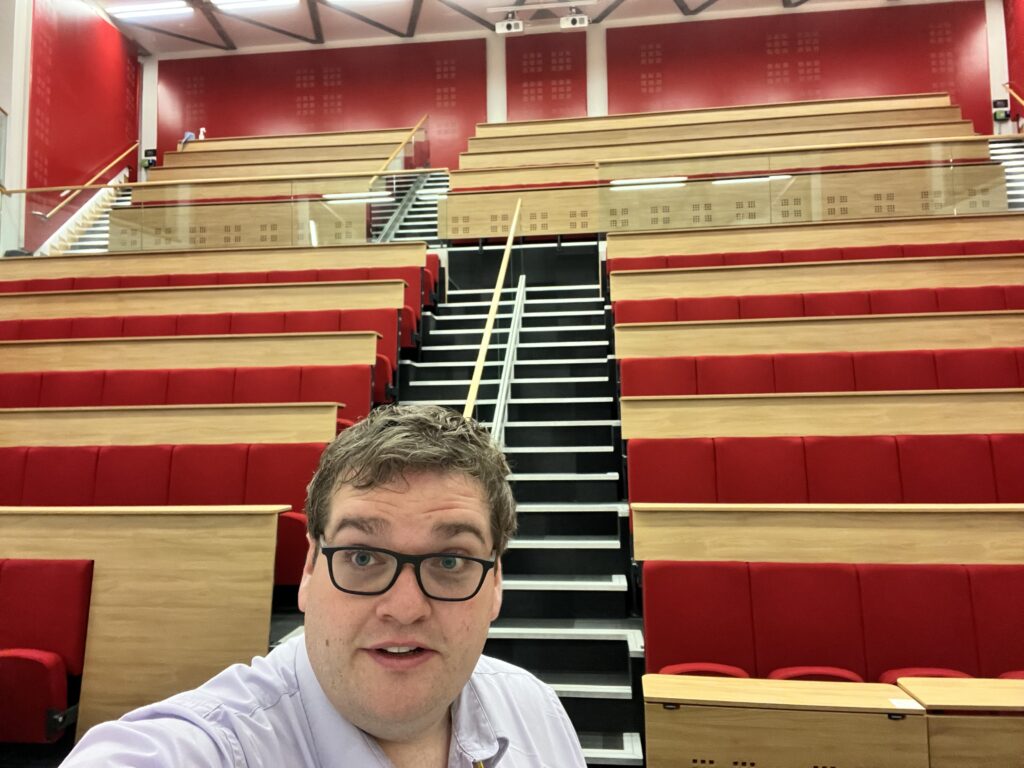
Tomorrow marks my first day of teaching in my new role as Lecturer in Education Studies, and I’m very much looking forward to meeting the students I’ll be working with over the next academic year. My classes include the research and dissertation modules at both L6 and L7, which form significant milestones at the end of the UG and PGT programmes. Research philosophy and support is one of my significant areas of expertise, having supported hundreds of students across diverse programmes during my time working as a Learning Developer. I couldn’t be happier with this allocation.

What I am looking forward to the most is the opportunity to work with the same group of students beyond a single session. As a Learning Developer, I would see students in personal appointments, centrally-bookable workshops and in-programme lectures across every discipline. While this diversity was always fun – I would see so many people that it was impossible to learn names, see progression or develop those positive learner-staff relationships that build community. As a lecturer, personal supervisor and research supervisor, there will be opportunities for this. I know it won’t all be perfect – not everyone will engage or turn up – but there will be those opportunities! I think this is, perhaps, one of the most significant changes from working as a Learning Developer in the third space to being an academic member of staff. Time will tell if I’m right!

At the L6 induction, it really struck me that these students will be graduating in a year’s time. Over this academic year, I’ll have the opportunity to watch and support them in engaging in some pretty cool research projects. At the end of the year, I’ll get to see them walk across that stage. I want them to feel proud of themselves and what they have achieved. That, too, is something I wouldn’t see in the third space – or at least not in the same way.


I’ll leave this post as a quick one! This is all technically four days before my start date, and the early teaching is part of the benefit of an internal move. It’s also made the move from one role to the other super blurry. I am, however, VERY glad about this. I can’t imagine a hard start next week without any of the meetings, preparation and logistics (read: office move) of the last few weeks. I’m very glad the Library has facilitated this transition so well.

Leaving the thirdspace

For the last decade, I’ve been working in the thirdspace as a Learning Developer based within the University Library at Hull. Learning Developers work to support student learning, often working to challenge and expose the hidden curriculum to empower student success. This support is delivered in many ways and can include personal appointments, bookable workshops, online courses, resource development and in-curriculum teaching. Over my time as a Learning Developer, I regularly engaged in all these formats. It is also important to note that as a profession, Learning Development is diverse – with some based in Faculties and others in central services. Whatever that base, it is usually a defining aspect of that specific learning development role, framing the role, responsibilities and relationships that surround it.

Learning developers as thirdspace professionals

The position of Learning Development can also impact contracts – either professional or academic. Here lies the problem. Learning Development rarely aligns with the academic-professional dichotomy, and this is the same for many professions that engage in academic-related activities. This has been heavily investigated and theorised by Whitchurch (2003, 2008, 2009) as The Rise of Thirdspace Professionals.

[Thirdspace professionals include] teaching and learning professionals, research managers, learning technologists and staff in academic practice, library and information systems. The situation would therefore appear to be more complex than a straightforward ‘academic’/‘non-academic’ extrapolation from employment statistics. Although they may be classified for employment purposes as non-academic, an increasing proportion of such staff are likely to have a mix of academic and professional credentials, experience and roles.

(Whitchurch, 2003)

My life in the thirdspace

Serving as a thirdspace professional has been a hallmark of my career for the last decade. It has brought advantages allowing me to: engage across a broad range of academic disciplines, develop different forms of (non-academic) expertise and embrace networks of other thirdspace professionals. I even recently collaborated on a book chapter (in press) with a colleague that embraced the benefits of this thirdspace position. There have, however, been disadvantages. Thirdspace professionals can lack the same development and progression opportunities as academics, can have limited opportunities for scholarly practice (contractually) and rarely engage in the holistic whole of academic practice. These opportunities and challenges have characterised my practice and development for 10 years now – but this is all about to change. As I discussed in #NewJob, I’m starting as an academic in my new role: Lecturer in Education Studies. In short, I’m leaving the thirdspace in 10 days time.


The photograph at the top of this page is my empty desk in the Library. Everything is all cleared out and moved to my new office. This moment was kind of symbolic for me. For me, the empty desk represents leaving the Library, leaving colleagues and moving towards something new. BUT, one thing is clear. It isn’t only the Library that I am leaving. I’m also leaving the thirdspace.

The academic space

My new career will see me enter the academic space (whatever that is). I’m on the teaching and scholarship pathway, which should see the majority of my time spent on teaching with some space for scholarly activity – including pedagogic research. What that means in contrast to the thirdspace, I’m not sure. Some people tell me it won’t be so different. Others say it will be different – a new journey. Time will only tell what the reality will be. I look forward to sharing that journey here. 😄

I opened this post with a photo of my old, empty desk. My old workspace. As this post marks the start of a new (academic) journey, it feels fitting to close the post with a photo representing that start. So, in contrast to my cleared-out desk, here I am, all set up in my new corner of the office. This is going to be my new home for a while, and I look forward to reflecting on the journey. 😅

Far from the thirdspace, this photograph shows my new office. Three bookshelves sit above a computer desk with two monitors. The space is colourful with plants, books and posters.

One final note – I’m clear that this new role does not mean leaving Learning Development. As a Lecturer in Education Studies, I intend to have a scholarly interest in Learning Development, and I hope to take everything I have learned from learning development practice into my future teaching. I’ll also remain involved with ALDinHE, though accept my contributions are from a different position now.

Reference list

Whitchurch, C. (2009) The Rise of the Blended Professional in Higher Education: A Comparison between the UK, Australia and the United States. Higher Education, 58(3), 407-418.

Whitchurch, C. (2008) Shifting Identities and Blurring Boundaries: the Emergence of Third Space Professionals in UK Higher Education. Higher Education Quarterly, 62, 377-396. 

Whitchurch, C. (2003) Reconstructing Identities in Higher Education: The rise of Third Space professionals. Routledge.

#NewJob

Reposted from Twitter

September marks my last month working for the Brynmor Jones Library at the University of Hull.

I am thankful for the amazing 10 years I have had there, working as a Learning Developer over a couple of different job titles. 🧵

From next month (October), I will join the University of Hull School of Education (@UoHEducation) as a Lecturer in Education Studies. 🥳

I am very excited about this career change, and the new opportunities it will bring.

Very excited

I'm still working for @HullUni_Library for the rest of this month, & when I do leave, I won't be going far.

As my new start approaches, I can't wait to work with new & old colleagues @UoHEducation. I look forward to helping teach/develop the excellent programmes they offer.

While I have worked in Higher Education for 12 years, by the end of this month, this new job will mark my first academic role and (scholarship & teaching) contract. I welcome any advice as I embrace this new journey. 😁

While, on paper, this transition is a move from Learning Development, I don't see it that way. A fundamental understanding of how students learn & how the hidden curriculum undermines them is something I intend to take into my practice!

#loveLD has not seen the last of me!

In particular, I also need to thank the amazing @KEHplantsci and @DebbieHolley1 for their support and coaching. I owe both of you one. ☺

I admire how you champion and appreciate professional services. I hope to follow your example as I move into the academic world! 🌍

#PhDchat #HigherEd #NewLecturer #PhDlife #loveLD #CareerChange #NewJourney #NewJob #LTHEchat

Originally tweeted by Dr Lee Fallin (@LeeFallin) on September 1, 2022.

The Double Diamond: Fixing Higher Education Challenges with Human-centered Design

Over the last couple of months, I’ve been part of a project to use human-centred design processes to approach challenges in Higher Education (HE). This was a big project, looking at institution-wide challenges and what could be developed to address them. We gathered volunteers across the University and asked them to work with us on identifying problems or challenges. We then considered what success looks like outside of HE and what solutions are needed in HE. Finally, we developed prototype solutions to identify how those issues could be addressed. These processes are primarily based on The Design Council’s (2019) Double Diamond (see below). The Double Diamond is a visual representation of the design process and is used to help ensure projects design the right thing and design things right (Ball, 2019).

The Double Diamond

Working through the Double Diamond leads you through two sets of divergent thinking to dream big – before using two sets of convergent thinking to bring back towards the issue at hand. This avoids the tendency for projects to identify one solution and fudge it until it works. Thinking through the Double Diamond puts people first, allowing a human-centred approach to design. The first diamond works towards identifying a design brief, while the second diamond develops and pilots solutions that eventually support an outcome. It can be argued that this is the heart of the design process.

The Double Diamond - two sets of divergent and convergent thinking.

These Double Diamonds of divergent and convergent thinking represent the four stages of design: discovery, define, develop and then deliver. These Double Diamonds sit between the challenge and the solution, leading teams from the problem to the outcome.

Discover

Discover focuses on questioning the problem or challenge. This focuses on dreaming big with the use of divergent thinking. Here, ideas can absolutely run wild – often, the crazier, the better. In our own project, one team developed a substantial monorail system to link the University to local communities. While we’re not going to build a monorail – it is a fantastic synonym of a wider problem. This all leads to the next stage: define.

Define

The second phase takes the findings of the discover phase and uses convergent thinking to synthesise and make sense of them. The end goal is a design brief that summarises and defines the problem. This clearly identifies the challenges and is used in the second diamond to work towards solutions. Using the monorail example led to a cohesive and condensed design brief that identified a challenge with connection and transport.

This phase can also identify further challenges that may link back to further discovery phases.

Develop

The third phase takes the design briefs and develops multiple solutions for them. This is another phase of divergent thinking, allowing that big-dreaming – but within the scope of the brief. At this phase, the different solutions will be prototyped and tested. This doesn’t have to be a real-world trial – but can involve mapping the solution and testing it with colleagues and service users.

Deliver

The final phase of the double diamond works to deliver the outcome. This phase uses convergent thinking to take one of the solutions forwards. This will eventually become the launched solution to whatever problems, issues or challenges have been identified.

This phase can identify the need for alternative solutions that link back to further phases of development. It can also redirect back to the very start if it identifies other challenges that require the full process again. As such, the Double Diamond can be cyclical, re-directing back to earlier phases where required.

From challenge to outcome with The Double Diamond

The below diagram brings together the phases discussed above. While there are multiple representations of The Double Diamond (Ball, 2019), you will notice they are all based on the principles written above. I’ve kept this visual simple, documenting the core steps and links forwards/back.

This diagram shows the Double Diamond. Phase one works toward a design brief, using a divergent discovery process followed by a convergent define process. The second phase uses a divergent develop process followed by a convergent deliver process to develop a solution.

Conclusion: Using The Double Diamond in Higher Education

The Double Diamond processes worked perfectly for our project. This was something that was largely linked to our digital and physical estate – but I am interested to see how this can be used elsewhere in our institution. These processes put people first – and there is significant potential for expanding this. I’m particularly interested in how this could support curriculum design. Our institution uses some excellent curriculum design frameworks, but this often misses that broader discovery phase. Programme teams may look at similar programmes of study, but we rarely go beyond. For me, the crux of the potential is this:

How often do we ask ‘What does an excellent educational experience look like?’ – thinking beyond the confines of Higher Education or our existing programmes of study.

This would allow us to look to schools, colleges, apprenticeships, coaches, training companies, MOOC providers and all other forms of education to learn from them. As a school governor, I often see excellent things happening in Primary and Secondary education that we could learn from. These experiences are had by our students in their early forms of education – and I often think HE isn’t ready to meet the expectations these set. Part of the problem is that programme teams are not responsible for the broader educational facilities and experiences that require development to meet some of these challenges. This would require a different mode of whole-university support for programme design, requiring different management forms, development and financial accounting.


References

Ball, J. (2019) The Double Diamond: A universally accepted depiction of the design process. Design Council. Available online: https://www.designcouncil.org.uk/our-work/news-opinion/double-diamond-universally-accepted-depiction-design-process [Accessed 20/08/2022]

The Design Council (2019) Framework for Innovation: Design Council’s evolved Double Diamond. Design Council. Available online: https://www.designcouncil.org.uk/our-work/skills-learning/tools-frameworks/framework-for-innovation-design-councils-evolved-double-diamond/ [Accessed 20/08/2022]

A list of things to always do - or avoid to help with inclusive and accessible design.

Designing for Diverse Learners: A new dawn

Last week I had the pleasure of launching the new version of the Designing for Diverse Learners guidance at the ALDinHE Conference 2022 alongside my colleague Tom Tomlinson. It is fair to say that this release is mainly due to the hard work and dedication of Tom. He worked to painstakingly bring the Designing for Diverse Learners work out of rigid PDF formats designed for print into a modern accessible designed for the web. The one thing that has me the most in awe is how Tom has helped preserve the overall look and feel that helped make this resource so successful in the first place. It is fair to say we’re both really excited to bring this to the wider community and we can’t wait to see what you think.

Sitting behind this new release was a broader project team supported by Kate Bridgeman and Conor Start at Hull as well as Kate Wright from Aberystwyth who helped bring the original poster into the Welsh language. As part of this work, we reviewed each and every single item on the poster, refining each point for clarity, precision, and accuracy. We tweaked here and there – with the end result keeping the spirit of the original work with some added information to really hammer the point. We’ve also supported each set of guidance with a full-page that explains the why sitting behind the instruction. I think this will really help ‘sell’ these points to educations, but also provide them a quick start by linking to relevant guidance.

Designing the Designing for Diverse Learners resource

This release broke free from the confines of a PDF/poster into a fully dynamic, online website. These changes make the resource as accessible as possible for users while providing a responsive design to maximize device compatibility. This is all while retaining the original always/avoid instructions in a split format. My favourite piece of Tom’s handy work is how the resource scales, maintaining two columns for large screen and print – but switching to cards on smaller screens. Tom has written up a more detailed account of this transformation in his recent blog post.

Another significant aspect of this version is the multitude of formats. We’ve switched to HTML/CSS as the main mode of delivery, providing an accessible and dynamic experience. This is, however, still backed up with a print version for anyone wanting to keep the resource as a handy quick reference guide on their desk. We’ve also provided both PowerPoint and Google Slides to help maximize the reach.

Reuse and licensing

This version maintains the same CC-BY-NC-SA Creative Commons Licence. This license has been a significant enabler in allowing re-use and adaptation. After all, it is under the terms of this licence that our work was able to evolve the original guidance from The Home Office. As with the previous versions, users will be able to reuse, remix and adapt this work for non-commercial means as long as they too share-alike. I’ve previously reflected on this license and how it has enabled our work in the CLA Blog. One-touch that I think works particularly well is that Tom has also bundled the icon pack into a separate download package. This will further enhance the re-usability of the poster and allow others to use it in their own contexts. We’ve seen our original work significantly evolve – and we can’t wait to see where it goes next. If you want to help us take this resource further – please fill in this form to get involved.

Finally, I know not everyone was able to make our ALDinHE Conference session. Please find the slides below – in case you are interested in what we shared:

ALDinHE Conference Presentation: Designing for Diverse Learners


I cannot believe it is over four years since I last blogged about this. What else would you like to hear about this?