Space and place are the major focuses of my research. Earlier this month, I had the pleasure of delivering the keynote session for the Winter Symposium at the University of Hull. The conference was titled Building and Supporting Positive Learning Relationships, with a broad focus on how we build connections with students both within and beyond programmes. This was a perfect opportunity for me to discuss space and place. I had just under an hour, so split my time between presentation and discussion: covering the relationships students have with spaces and places. This took the discussion beyond the purely social relationships between students, and between students and staff.
Spaces are containers – the sites of activity and interaction. When we develop a relationship with a space, it becomes a place for us. Not just a university – but my university. Not just a course – but my course. I argue much more focus is needed on the development of universities as places. How do we support students to make the spaces of higher education, places that they belong? That they feel included? I think this is a vital component of the inclusion jigsaw – and something that is often forgotten when focusing on the relationships between people. Obviously, the connection between people is important – but it is only part of the story of success.
Leave you thoughts in the comments below – and check out the slides below or via SlideShare.
Reflective practice is a core tenet of many professions. From nursing to teaching – reflective practice is an aspect of qualification, a requirement of professional bodies and an accepted aspect of practice. Reflective practice requires an individual to engage in conscious thought about an experience, event or practice. Such thinking should be critical; considering both what has worked and what has not. The aim of such reflective thinking is to identify what went well so that you can keep doing it – and what hasn’t worked well so you can change it. In short, reflection should be a useful tool for future action. Reflection also requires some form of expression – from writing in a personal diary or keeping notes on your practice to having a conversation with peers or writing a formal essay. Reflection needs communicating – even if it is only for your own use.
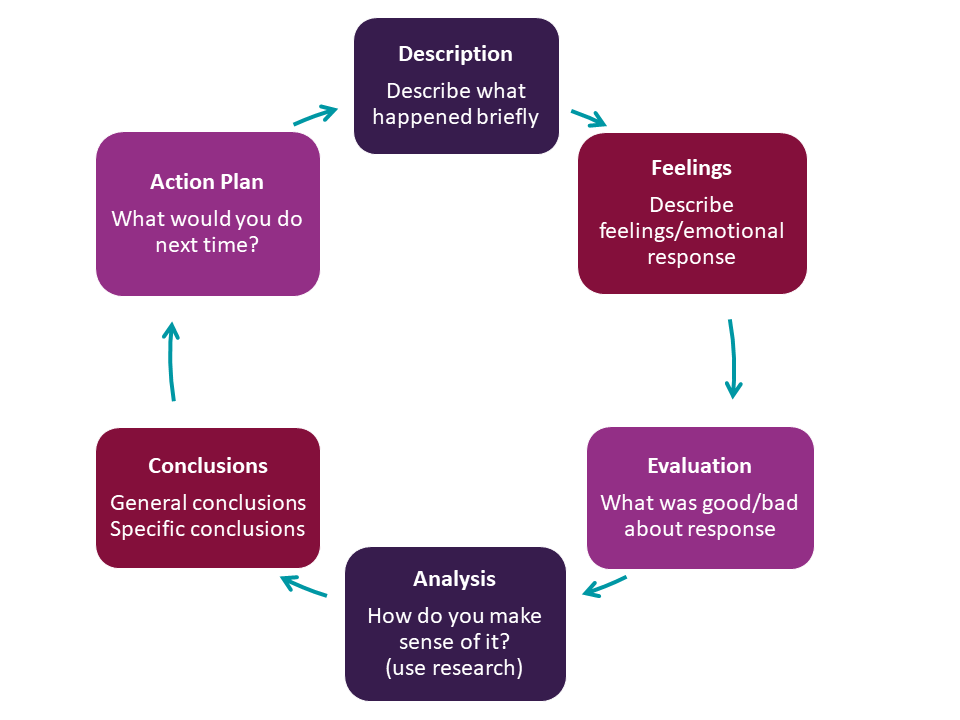
While there are many different academic models of reflection, they usually revolve around three core components: an experience, thinking about an experience and then putting that learning into practice. Popular models include Kolb, Gibbs, Schön, Rolfe et al., ERA and Brookfield. As a learning developer, I see these models used frequently in student work. There is, however, one model I see more than any: Gibbs‘ Reflective Cycle – and I’m sick of it.
Gibbs’ Reflective Cycle
Before I start the critique, I should first say that Gibbs’ model has its uses. The rigid structure serves some students well, setting out how their essays should look. Instead of fretting over planning, this is largely set out in Gibbs’ model.
Another advantage is that it annexes descriptions into a single section. While this can cause other problems, it at least contextualises the role of description in the rest of the piece – it is a small aspect. I also like how Gibbs’ refers to feelings as a distinct aspect. Feelings are often overlooked and their prominence in the Reflective Cycle is helpful at framing reflection as different from normal discursive academic writing.
Having given Gibbs some form of an introduction, this section briefly lists the issues:
The Reflective Cycle is boring – The six-stage model leaves little breathing room for interpretation or expansion. It produces essays that are samey.
The Reflective Cycledetermines paragraphs – Most implementations of Gibbs’ model force students into a single paragraph per stage of the model. This doesn’t scale well as essay lengths increase, leading to too much description and feelings. It also does not provide much freedom on how different elements of a reflection are structured.
The Reflective Cycle can lead to superficial reflections – This is because Gibbs does not require the writer to challenge values or assumptions associated with any of their actions in the experience.
The Reflective Cycle fails to draw connections – Without linking the experience being reflected upon to other events, there is a missed opportunity to demonstrate depth.
The Reflective Cycle focuses too much on the reflector – While reflection is a highly individualistic thing, most approaches to it consider there are others. However, Gibbs fails to move beyond analysis of self. This can make reflections self-serving as opposed to individually useful (and sometimes that means challenging!).
The Reflective Cycle fails to pose probing questions – While deep, probing questions certainly can be associated with some of the aspects of Gibbs’ model, as presented in overview, these are lost. This, again, leads to superficial reflections.
The Reflective Cycle fails to engage critical thinking – While the model has components of evaluation and analysis, these are simply defined. Evaluation and analysis should present an opportunity for critical thinking – but this is largely absent.
The Reflective Cyclefailsto contextualise – The distinct sections for description and feelings are set towards the front of an essay. This can makes it difficult to links between different aspects of evaluation and analysis with elements of description.
The Reflective Cycle confuses novices – So many students struggle to differentiate the evaluation and analysis. This can lead to mixed up sections. I also don’t know if the analysis and evaluation are the right way round. Sometimes I’m in favour of swopping – and others in favour of the status quo.
These points demonstrate many of the weaknesses associated with Gibbs’ Reflective Cycle. I often find simpler models more effective as they give more freedom and space for tailoring to the task required.
Other options
When considering Gibbs, it is also useful to consider that other models are available. My favourites right now are:
Rofle
Rolfe et al’s (2001) framework focuses on three questions:
What?
So what?
Now what?
While this may seem simpler than Gibbs, I feel it allows more flexibility and adaptation. The three questions lead writers to consider a combination of description, links to theory and actions to take forward.
Brookfield
Brookfield’s (2005) four lenses encourage reflectors to consider an event from multiple perspectives
Lens of their own autobiography as teachers and learners
Lens of students’ eyes
Lens of colleagues experiences
Lens of educational literature
This directly addresses one of the critiques of Gibbs – that there is no consideration of others in depth.
LEGO Serious Play was an essential aspect of my research method, getting participants to ‘build’ their answer, not just talk it through. I’ve also used it as a teaching facilitation tool to support critical and divergent thinking. LEGO is one of my most favourite research and teaching methods, as you can let people work through answers with the use of LEGO, and then capture the salient points when they share their build. It not only saves a lot of data processing for the researcher, but it is a lot more fun for participants. For teaching, it supports different forms of thinking and really gets ALL students involved. While LEGO Serious Play is a distinct facilitation approach and you can get trained to use it, there are also some helpful books to get you started. I recommend Blair and Rillo’s SERIOUSWORK as a good place to start.
To use LEGO for any aspect of research or teaching, you first need to buy some! This blog highlights the choices I made to build my budget LEGO Serious Play kit.
LEGO Serious Play sets are awesome! But expensive. There is a range of sets available on the official LEGO shop, but they were beyond my budget as a self-funded doctoral student. I had to improvise. This article will introduce the sets I purchased and how I think they worked for research and teaching use.
My haul
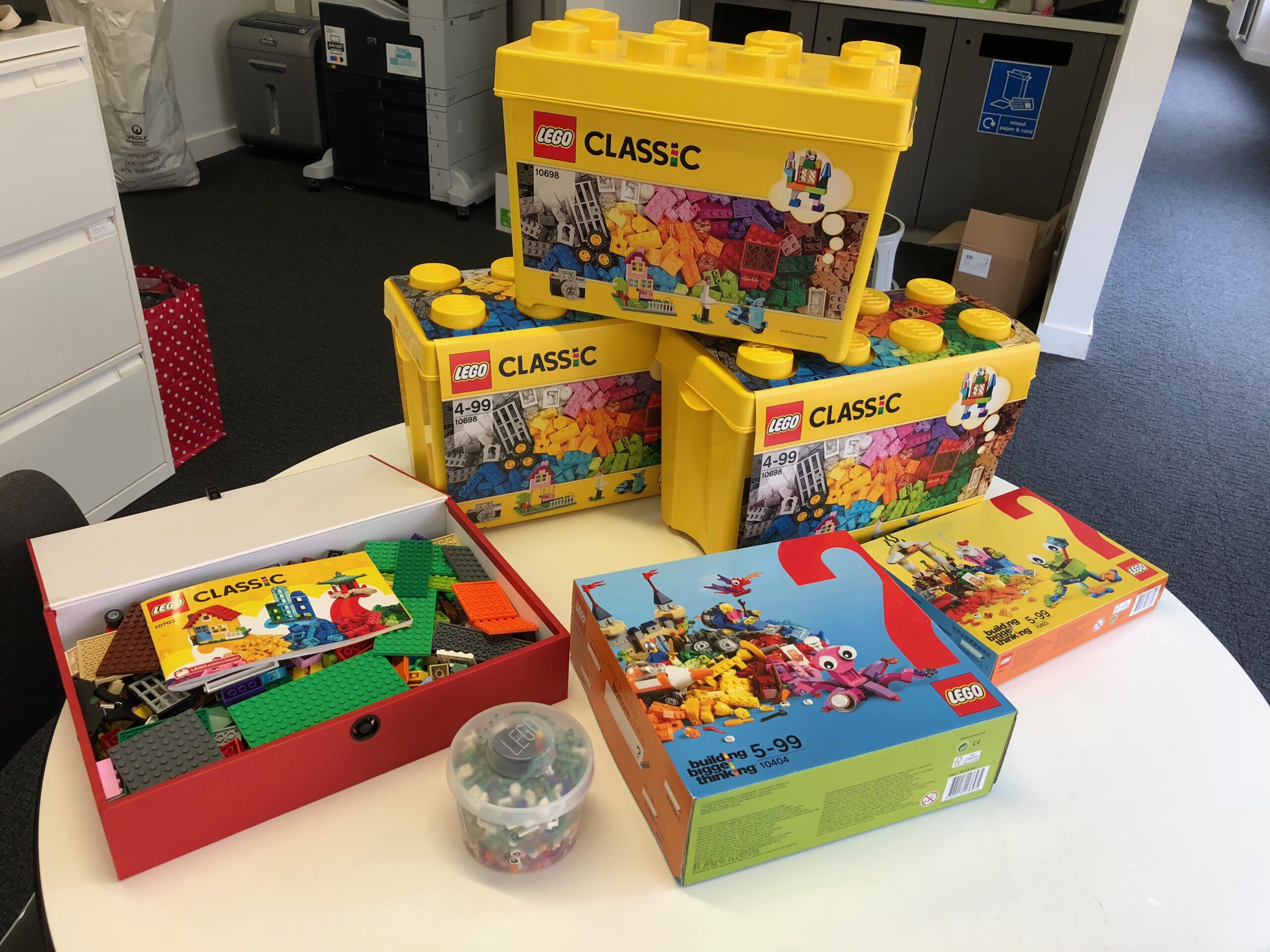
The LEGO sets I purchased for my LEGO Serious Play kit
LEGO classic
LEGO Classic sets are a brilliant way to bulk out your LEGO Serious Play kit. You get a lot of brick for your money, and the variety of colours is fantastic. I’m so jealous of children today – LEGO had about five colours when I was a child. I already had a Large Creative Brick Box (10698) – so bought a couple more to serve as the baseline of my LEGO Serious Play kit. The plastic storage boxes they come in are also the perfect place to keep the LEGO stored away between uses. In addition to these larger sets, I also bought a couple more classic sets, one featuring lots of windows and doors (11004) – the other featuring lots of wheels (11014).
The available sets vary over time, but I have found they usually have a classic set on offer with extra wheels and another with windows and doors. These are useful additions to any LEGO Serious Play kit so I’d advise investing in such sets. Windows and doors are not only useful in a literal sense, but they work well for metaphors. Wheels work well for movement, vehicles and more. I’ve also seen a set with extra roof tiles which I think could be useful. It’ll certainly be part of my next LEGO purchase.
Interesting bricks
Next up I wanted to add a set with some different/interesting bricks. To be honest, any set would do for this – but I wanted to avoid anything licenced. I felt items like a Star Wars brick or a Spiderman Minifigure would not serve as universal references, so wanted to avoid them. I think Minecraft LEGO sets are particularly useful as they have lots of transparent tiles and colourful bricks. At the time I purchased my kit, LEGO was celebrating its 60 year anniversary and had launched some special Building Bigger Thinking sets. I purchased World Fun (10403), which contained some useful pieces like a treasure chest, eyes, columns, helicopter and a couple of Minifigures. I also chose Ocean’s Bottom (10404) which has more eyes, wings, wheels and transparent bricks.
All these LEGO classic sets built the bulk of my LEGO Serious Play kit. This gave me lots of standard bricks, including windows, doors, wheels and more. The next pieces I used to build my collection were all a matter of choice. For example, baseplates can be useful for a lot of LEGO Serious Play kits – but they were not something I needed for my particular research. As such, I decided to forego them. If you need to facilitate collaborative builds then baseplates are the perfect way to bring this together.
Pick a Brick
To top off my LEGO Serious Play kit, I wanted to choose a few additional bricks. To help with this, I used the Pick a Brick station at a LEGO store. I focused on extra eyes, small tile pieces and anything else small. This would allow participants to build intricate/small/detailed models – should they wish.
Minifigures
Minifigures can be a bit of a divisive topic when considering their use in LEGO Serious Play. They can lead participants to focus on people (which may not be a bad thing) when they’re building their answers. For my research, I felt participants would benefit from Minifigures. Libraries are inherently social spaces – and people are part of that. I didn’t want participants wasting time in my research sessions ‘building people’ – so Minifigures it was!
Again, I felt the best place to get these was through a LEGO shop. There are build-a-Minifigure stations in LEGO shops allowing you to build three custom figures per pack. Four packs (12 figures) covered my needs.
Preparing the LEGO
The worst thing you can do is walk into your first LEGO Serious Play research or teaching session with a load of new boxes of LEGO. It’s worth spending some time unboxing and unbagging it to ensure it is ready to use. I also spent time assembling a few elements to make them ready for use. For example, adding tyres to wheels, putting wheels on axels, putting panes in windows and adding doors to their frames. While participants are free to switch things around, it does mean the bricks are ready for use without needing to combine these pieces.
From the unboxing photo below, you can see there was a lot of plastic bags to ditch. I also wanted to find a way to layout the LEGO without getting it everywhere – so I used the cardboard box lids from printer paper boxes. It worked really well to stop LEGO falling all over the floor during my research sessions.
Ready to go!
With all the LEGO purchased, unpacked and ready to go, I was able to start using it for teaching and research purposes. I still keep the LEGO stored in the big yellow boxes that came with the larger sets. I also bring a load of those empty box lids to pour LEGO out and stop it from getting everywhere.
LEGO works as a wonderful research and educational tool. I took this snap from one of the first sessions I facilitated three years ago. I can’t wait to share some more of my reflections on this.
This post will introduce my approach to using LEGO to teach academic writing. I conduct a lot of personal appointments with foundation and undergraduate students. For some students, ordering their ideas and structuring them is a real challenge. This problem tends to stem from:
not knowing where to start,
a sense of being overwhelmed,
the volume of information they consult,
the volume of information they feel *needs* including in their assignment.
Further, it is not just a case of ordering ideas, but structuring them that can be problematic. I feel that a lot of the poorly structured essays that I see are failing at the paragraph level. This is a real issue for a lot of students, especially those with less writing experience, those who have taken a break from education, or those who have no experience of essay-style examination. The latter is particularly an issue for international students from countries with different approaches to higher education assessment, often focusing on examinations above coursework essays.
This post will detail how I’ve used LEGO to discuss some of these issues with students, and use it to help them outline their approach to academic writing. This starts with a student I saw a couple of weeks ago. I was struggling to communicate the structural elements of an essay to them. The student had lots of ideas, but simply did not know where to start and all the approaches in study skill books were simply not working for them. Instead of just rephrasing, I tried a different approach, running downstairs to grab my tub of LEGO. I think LEGO bricks are an excellent way to visualise some elements of academic writing and decided this was the perfect time to give it a go. I think this metaphor for academic writing structure can really help students struggling to structure their ideas – or more appropriately, to help students who are overwhelmed with their own ideas and sorting them out.
When planning your essay, it can be really daunting. You end up with ideas all over the place:
You need to order these ideas into groups. The act of doing this enables you to identify the major aspects of your essay. As expected, some ideas will be discarded at this phrase too (see the pile to the right side). It is still worth keeping a record of these as they may be useful at a later stage (who would EVER throw a LEGO brick in a bin!?!?!):
Once you have grouped all of your ideas like this, they form the basis of your overall argument. Each brick group is an aspect of this, forming one of the micro-arguments that lead your reader to the conclusion in your overall argument. These micro-arguments (brick groups) may by represented in an individual paragraph, or across a group of paragraphs. This process is not easy. At this idea stage, some of your groups will end up too large and you will need to break them up across two or more paragraphs. When this is the case, it is hard to distinguish which paragraph an idea belongs in. In reality, you are more likely to come across this problem later in writing when you have an oversized paragraph that you need to break up:
When all the elements of your points, arguments or ideas are grouped into their individual paragraphs, they need further structuring:
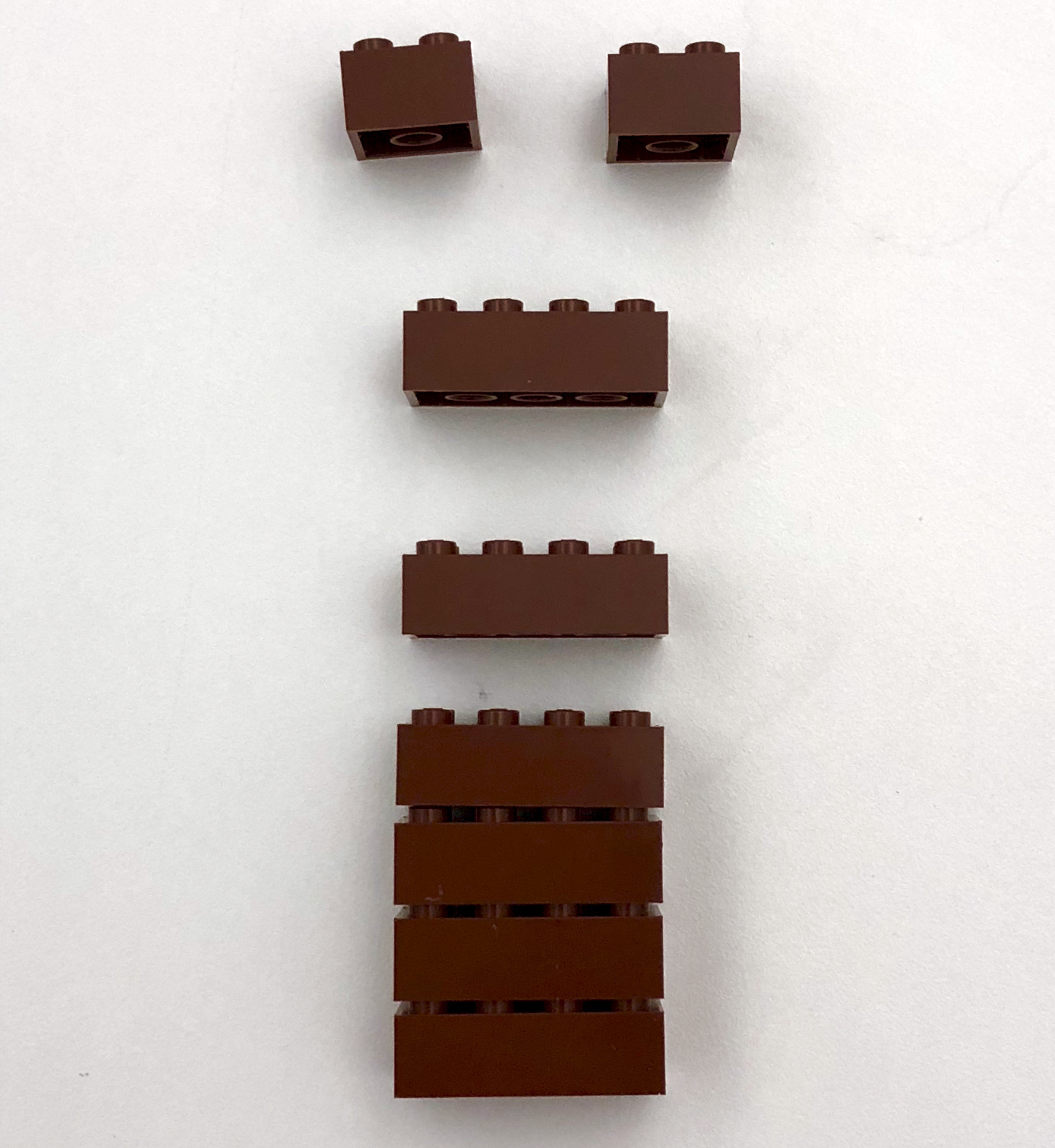
A solid paragraph should have a good structure. I recommend TEAL as a good starting point:
Topic – A brief introduction to what the paragraph is about. What is your point?
Evidence – Academic evidence, reflections, your own research/data
Analysis – The ‘so what’? Persuade the reader that your conclusion is the correct one
Link – Link this paragraph to the next – or to your overall argument.
(Indeed – this stage may be the *best* starting point for some students, but the route described so far is excellent for those who struggle to structure all their ideas in the planning phase)
TEAL is a good way to structure all those ideas into a coherent paragraph:
LEGO bricks are an excellent metaphor for how you need to link all these elements together. The bumps and they way they interlock with bricks above makes this point clear. Everything with a paragraph must coherently link together and make sense:
Once you have your individual paragraphs, they need to be assembled in the right order. This is often done as you go along, but as you being to edit, you may realise they need re-ordering. It isn’t just the structure that may change, and as you edit, some smaller points may need removing as you further refine your ideas (and try to get under your word count):
All of these elements together can help you rule your own writing:
Taking this into practice
To put this into practice, I often recommend students grab a stack of post-it notes or use a mindmap to get all of their ideas on the table. The principles above serve as a great framework from which to interpret all these ideas. Working from the ideation phase, grouping/sorting and refining the order and breaking it into paragraphs. If all else fails, literally using the LEGO bricks works well too. Small post-it notes can be used to adhere ideas to the bricks in a way that doesn’t require cleaning them afterwards. This works perfectly with Duplo too.
The model above is designed to help students identify their main points, group their ideas under these main points, and then divide those points into interlinked paragraphs. As the bricks represent, these all need ‘clicking together’ to form a stable essay (or stable LEGO model!). This may seem a little obvious for advanced writers, but it is certainly worth trying with those new to academic essay writing. As above, please let me know what you think! I should also note a quick thank you to my colleague Sue Watling. She indicated this approach was interesting when I mentioned it in conversation, so I figured it was worth expanding on my blog.
This post introduces the Rocketbook Panda Planner, a new tool I’ve been trying to help manage my work/life/study. When I first returned to work from parental leave, I needed to get my head back into the world of work. I’d tried lots of different tools to keep myself focused and help me plan and prioritise my weeks and days. For the most part, I had something that worked. However, I had to acknowledge I needed something different now I am a father to three! Something that would help me plan life — with the perspectives of fatherhood and a busy career.
I’d decided I wanted something handwritten as opposed to something digital. Mobile phones, tablets and laptops are doorways to a world of distractions. I knew that if I used an app, I would inevitably get distracted by the many other things in my devices. Probably email or Twitter — the two usual culprits.
So! I needed something to motivate, plan and prioritise. Plus it must be ‘paper-based’.
Introducing the Rocketbook Panda Planner
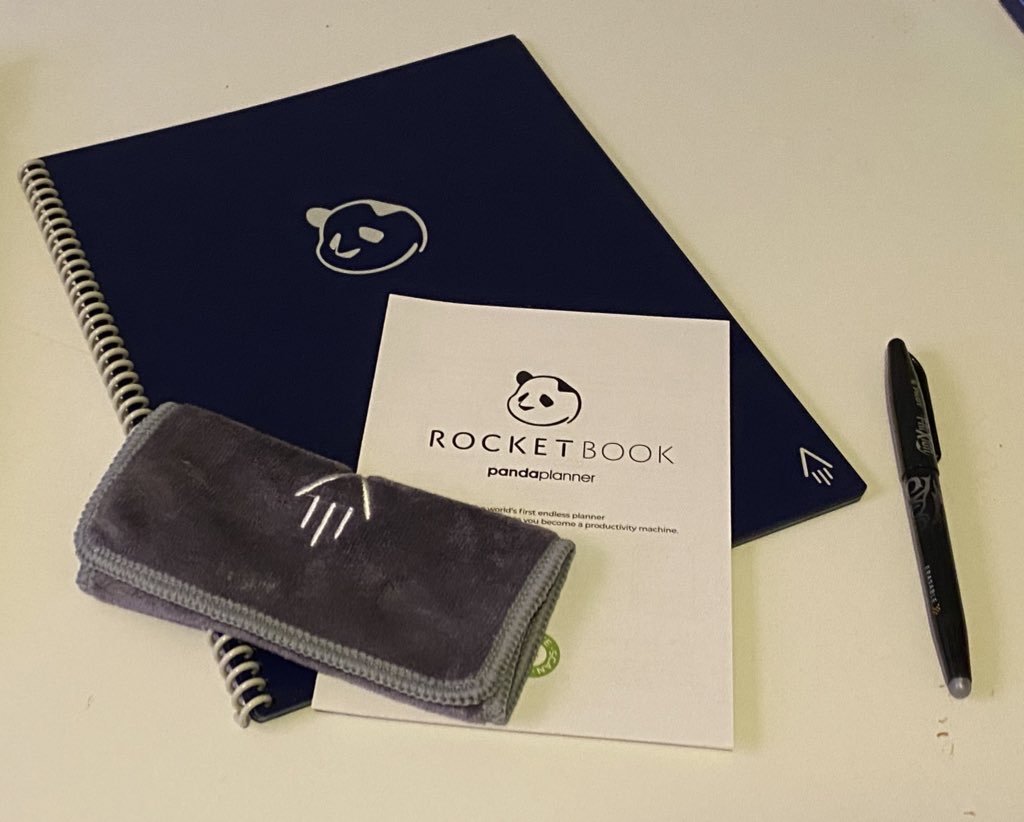
My newly unboxed Panda Planner
After some research, I came across the Rocketbook Panda Planner. Described as a planner for ‘those who want an endlessly reusable planner to last for years, if not a lifetime. The Rocketbook Panda Planner gets you organised so you can focus and hit your goals.’ That sounded just like what I needed.
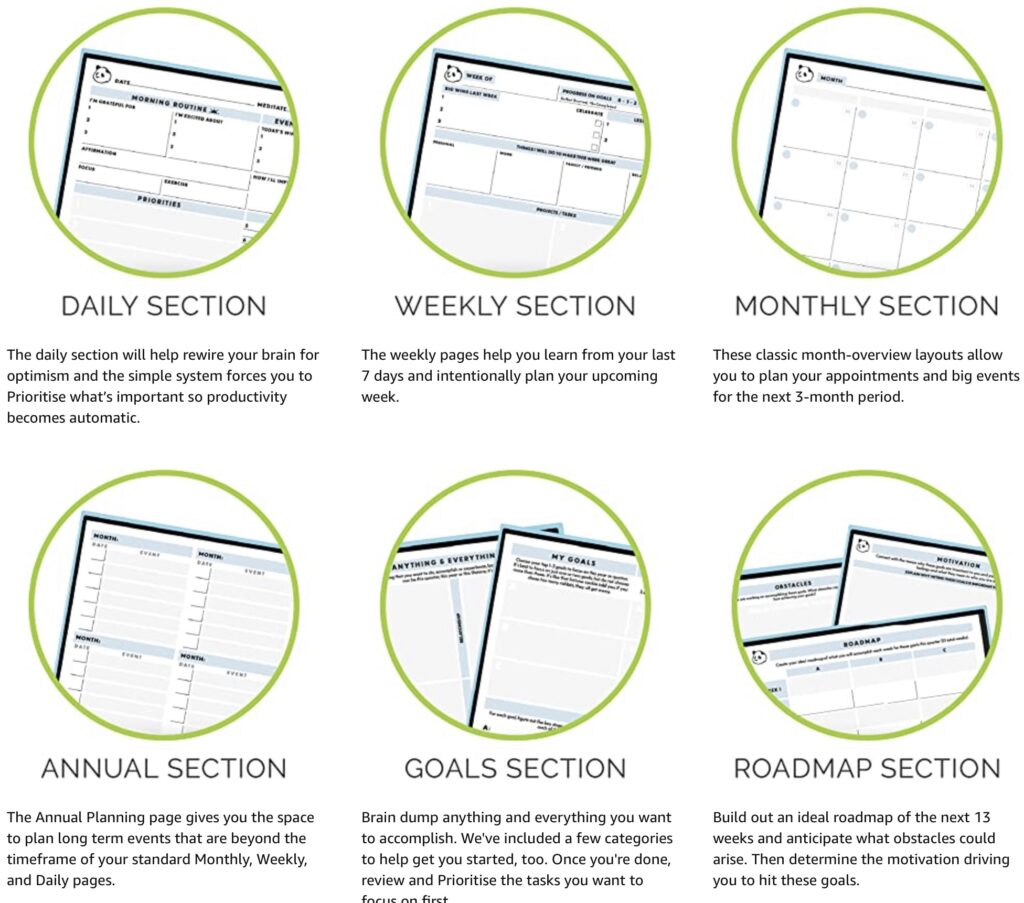
The planner is split into a number of different page types to help you plan:
Panda Planner page types
More importantly – it is reusable. I’d never considered a ‘re-usable’ notebook (and wasn’t aware they existed). It is however a fantastic idea. The entire book is essentially wipe clean. It’s a bit like a whiteboard meeting a book. This means there is no guilt from having another diary that will end up in a recycling bin. The real selling point of this wasn’t clear until I actually used it. The beautifully therapeutic moment you wipe away days and weeks of plans, achievements and reflections (there is an app to help you retain a digital copy).
The Rocketbook process
Using the Rocketbook Panda Planner
I very much enjoyed the process of using the Panda Planner. I first worked through the goals and roadmap sections to plan the next quarter (3 months). I set out a number of ambitious work, research and personal goals. It also gave me a valuable opportunity to reflect on potential barriers. Here I noted that my three little ones may become barriers to progress – but it also helped me concretely write that it didn’t matter. As a parent – I needed to juggle that new balance and the Panda Planner helped me navigate this. It was helpful to pen some of this down and get to grips with my life’s new priorities. I am, perhaps, guilty of focusing on work too much – and the Panda Planner helped me bring some balance to that.
With the quarter prepared, I then moved towards weekly and daily sections. I particularly liked how they provided opportunity to undertake routines as part of the day. The daily planner (below) starts off asking what you are grateful for, and excited about — three items for each list. It also provided space for a daily affirmation. Not something I’d usually go for, but with three adopted children moving in, I was writing ‘I can do this’ a fair bit. For the evening is an opportunity to reflect on the day. Here you can record the wins for the day and take note of any opportunities to improve. The rest of the page is very much what you’d expect of a daily planner: priorities, schedule, tasks and notes.
The layout of a daily page
What I’m using
I’d recommend giving the Rocketbook Panda Planner a go. I’ve since expanded to utilise a standard Rocketbook for my general notes. You can write on them with any of the Pilot Frixion line of pens and markers. I’ve found the Frixion fineliners much better than the rollerball ones as they put less pressure on the Rocketbook pages. I think this has to work in favour of longevity.
Written on a train on a phone – so forgive any typos. I’ll tidy up later!
Since 18th March last year (2020), all of my teaching has been online. Obviously, this was the right thing to do. Society closed. We didn’t really know much about the novel coronavirus first identified in 2019, we didn’t know much about transmission and vaccines were still a dream. The situation also developed rapidly. The government told us not to be worried about the virus, that it was of little concern. Two weeks later, we were in lockdown. For everyone in higher education, this led to a monumental pivot online. Like every university, Hull responded and followed governmental guidelines.
When the lockdown hit, I felt lucky to be based in the Skills Team at the University of Hull. As a team, we all had experience of teaching online. We also had the software, the tools and training to deliver a good online experience. Nothing needed to be procured. No training was needed. We just picked up and got on with things. I’m not saying that the switch to online teaching wasn’t challenging — but we had somewhat of a head start.
As the pandemic evolved over summer 2020 and cases plummeted, we were able to open our library — the Brynmor Jones. This was done with an abundance of caution, following all safety guidance and with a lot of risk assessing. We were one of the first HE libraries to re-open, recognising not all of our students had access to the technology or connection they required to be successful at home. The library formed an important part of social and cultural capital for some students — helping provide what they may not readily have. While open, as a library we also focused on safety, still delivering our support digitally. This meant that our service points were not staffed in the same way and we focused on self-help, live chat and query management. The library was primarily open for socially-distanced study.
While the library was open, teaching and appointments we’re still off the agenda. At the point of initial opening, we still kept these online. This doesn’t mean I’ve been working from home all this time. As soon as the Library re-opened last year, I was in the occasional day, usually once a week. I figured that if our frontline staff were in – I should show face too. I eased myself in. By January 2021, I committed to three days a week.
For most of the year, while I was on campus, my students weren’t. All classes will still online. In May 2021, we were able to offer face-to-face appointments again. It was strange (but lovely!) to see students again. I felt connected to my work again. It reminded me why I love my job — I’d missed that interaction more than I realised. While appointments slowly ticked over, class-based teaching, workshops and lectures face-to-face were still some time away. At this point, it meant that while none of us stopped teaching, many lecturers hadn’t ‘lectured’ or taught on campus for over a year. That’s a long time!
My timeline now lands on last week. The 6th September. My first on-campus teaching for over a year and a half.
I was a bit nervous. Not going to lie.
Was teaching in a room like ‘riding a bike?’. That is to say — can I easily pick it up again despite all this time away? As I walked over to the Cohen building, the nerves melted away to make rookie excitement. I was so excited I took a selfie to make the occasion – but decided to do this outside the building so the students didn’t think I was odd before I even started teaching them.
Yup! Me stood outside Cohen.
A quick photo later, I found myself stood in a room much larger than needed to facilitate some social distancing, I looked over a sea of faces (well… 25 faces), and I began to teach.
Thankfully. It was like riding a bike. I just fell back into that comfortable space at the front.
It struck me how odd it was being able to move and use body language again. It was surreal! I didn’t realise how limiting a webcam could be until I was freed from those constraints. I could gesture. I could easily point to my slide visuals. I wasn’t trapped behind a screen. Teaching in-person went beyond this freedom. It was easier — and I hope — better!
I was in the middle of explaining a model of criticality, and my students looked puzzled. I’d not explained it effectively. I’d lost some of the room. Immediately — I was able to change track and reframe my explanation. I could see the metaphorical lightbulbs switch on. They’d understood what I said. I’d explained better. I have missed that more than anything with online teaching. The tendency for students to not turn on webcams removes this valuable tool from educators. We can’t see how our students are doing. This, more than anything, I had missed.
It isn’t just about understanding or not. There are other visual queues to respond too. There were some clear points at which I could see students were a bit overwhelmed, worried or even frightened of the expectations ahead. However, in seeing this, I was also able to reassure them that we would support them to get there. They have a wall to climb, but we’ll help them build a ladder.
My final reflection focuses on energy. I’m well used to being on campus with my regular three days now part of my schedule. I had previously found it a tiring transition when I first adjusted from vegetating at home to being in the office. But I was past that. At least the main hit. Teaching, however, did exhaust me more than I expected. It takes a lot of physical energy. Standing, gesturing, thinking, watching, projecting my voice — as much as I loved my first session, I was sure tired after!!!
My advice to anyone easing back into campus is to be prepared. Getting out of the home for working is tiring. It’s an even bigger hit when you throw in some lectures.
Today I had the pleasure of starting my Postgraduate Certificate in Academic Practice (PCAP). As a learning developer, my journey is atypical to the peers on my course. This article serves as my first reflection about this. Our first reading was Kugel’s (2006) How professors develop as teachers. Kugel discusses a typical development pathway for lecturers — moving from an understanding of how to teach students towards an understanding of how to support their learning. In this, there are six stages, each characterised by the changing focus as lecturers develop their practice:
The transition from teaching to learning
This model was interesting. Kugel discussed how new teachers tend to focus on themselves as they begin to teach. They move towards solidifying their own discipline knowledge before starting to take into account students. These initial changes focus on teaching. The understanding of students develops, acknowledging them as receptive, then active learners. These later stages begin to focus on learning above teaching. Finally there is an understanding of learners as independent — with the core role of the teaching being to support students to teach themselves.
While I can see much in this model, it’s an interesting reflection for me as a learning developer.
The primary role of a learning developer is to help learners achieve that end goal — independence. While there are many nuances to this, ultimately learning developers are aim to work with students to help them develop their own autonomy and self-sufficiency. So… do learning developers really jump to the final stage of Kugel’s model?
Perhaps. At least at first. As a new practitioner starting in the learning development field 9 years ago, I feel I started from day 1 as a practitioner supporting this goal. Perhaps somewhat light in the tools I had at my disposal – but a focus on independent learning all the same. What I didn’t realise was that learning development itself had an underlying literature I needed to understand. As such, I perhaps worked backwards through some of Kugel’s model. I had to back-step and develop myself and my disciplinary knowledge to ultimately make me better at supporting that learning.
That backwards learning was important. It made me appreciate the diverse ways in which most academic tasks can be achieved. Without this understanding, there can be a focus on promoting your practices — or at least a narrow range. Inclusive higher education practices should never aim to reproduce yourself. More importantly, it required me to understand what teaching means, and how in reality, it wasn’t really that important in most learning development encounters. Indeed, it wasn’t even something I did that much. That brings me to my last reflection on this paper.
This final reflection relates to ‘teaching’ itself. The paper focused on teaching alone. However, as educations, we have more tools than teaching alone. As learning developers we are coaches. We are mentors. We are cheerleaders – and yes! Sometimes teachers. Yet, teaching isn’t everything. It is just part of the story.
My journey to the ALDinHE Conference (ALDcon) was a bit different this year. In any normal year I’d have been using public transport to travel cross-country to visit another university for three or four days, staying in the nearest Premier Inn. COVID-19 put a stop to any such business travel for everyone. ALDcon, however, was not to be defeated and returned in a fully-online format for 2021. Despite that, this opportunity was not assured.
I didn’t think I’d make it to ALDinHE this year. The time of year I would usually submit a proposal and make my intention to attend known was overtaken by life. As me and my partner were in the process of adopting, we had no idea what 2021 would hold or how the timeline would work. As it turns out it was February and March that I took my mix of paternity and adoption leave. ALDcon was a possibility.
Had this year’s event been face:face, I probably wouldn’t have made it. The booking would have been closed, the train tickets would have been expensive and I may have struggled to get accommodation. None of this was an issue with an online conference. I didn’t sign up until the week before. The only pang of regret I had was not presenting on something myself – or at least submitting a poster. I think it might be my first ALDcon without at least taking a poster.
So how was the online conference?
The sharing of ideas, gaining of inspiration and abundance of LD love were all very much there. I’ve come away energised – particularly regarding work to make LD practice more inclusive. I’ve also gained some valuable insight into how we may support reading and have already committed to deliver a new workshop at Hull based on what I have learned. By committed – I mean it’s bookable by our students now. Now that is instant conference impact!
As for the other conference elements, sadly, much like any other online conference it lacked the casual talk. The conference was not socially lacking by any means. Sessions were active. There were lots of social events too! However, none of those small conversations over coffee or a pint happened. I often find these are the most impactful to my thought processes and learning.
I also didn’t realise how valuable conferences are for time away. As a parent, I was mobbed every lunchtime and at the end of the day. I never realised how valuable conferences are for thought, reflection and writing. The journey there and back, the breakfasts, the time alone in the hotel room – all chances for me to type or pen my thoughts and make firm actions from what I have learned. This isn’t to say the conference had no impact. Not by any means. But I didn’t get as much time to process it all as I would like. I also had the inevitable creep of meeting and emails over the conference now allowing me to commit 100%.
So what did I learn?
This year I decided to approach my note creation and synthesis a bit differently. I continued to write notes in each session – handwritten, typed or mind mapped as I felt appropriate. However, I added an additional step – journaling each day to reflect on what these sessions taught me and how I would take it forward. Here are my thoughts:
It’s possible for professional services to share space, if not line management (Northampton).
I really dislike the work ‘skill’. I’ve not liked it for some time, but have been able to cope. Now, I wonder how much longer I can put up with it.
It is possible to run a reading ‘bootcamp’ in a short, two-hour session. I’ve already written the plan for the Hull version and made it bookable. (Sandra Eyakware)
A ‘resource in a box’ may be a manageable way forward for us to offer some engagement with local schools in a way that is realistic and scalable. (Amy West)
Magic and teaching have a lot more in common than you would think. (Will Houstoun)
Community, narrative, interaction, and journey is a beautiful way, to sum up the literacies of online learning (Carina Buckley).
I was not ready to talk about lockdown 1. I had honesty buried in my mind just how stressful and depressing the whole thing was. Admittedly, I was writing up my doctorate and was chained to my home desk for 16 hours a day which made things worse.
ALDinHE has revolutionized its web presence. A newly designed website, a dedicated conference website, the relaunch of LearnHigher – wow!
Did you say magic?
Yup! The day two keynote was delivered by Dr Will Houstoun. The session was titled Pedagogical Prestidigitation: Magic in Educational Contexts and beautifully drew comparisons between magic and teaching. Oh! And there was magic. Of course…
Magic is about an interaction. It is a performance. It has a narrative. There is a need to direct (not necessarily misdirect) attention. The parallels to teaching were beautiful. You can check out my notes on this one below:
And then there was decolonisation
This is a hot (but not uncontested) issue in higher education right now. There is some real concern that LD practice can propagate dominant ideas and structures if left unchecked. If LD is there to help students adapt to HE, are we not civilising students into higher education – reducing their cultural identity to make them confirm?
Difficult stuff.
Uncomfortable stuff.
I’ve spoken about this a fair bit at Hull. Higher education is generally too old, male, western and stale. I’m always cautious of decolonisation itself. Not because it isn’t important – but because a general approach of inclusive education is a better goal. While much of this is subsumed into decolonisation, I think an inclusive approach is distinct. We should teach in a way to ensure everyone is included and successful, no matter their race, religion, class, gender, sexuality, background – and so on.
There was some interesting stuff from Liverpool John Moors on this, and I’m happy to share my notes again!
That’s a wrap!
Well. It’s almost midnight now. I’ve only been able to write as everyone is in bed asleep – but even for a ‘normal’ ALDcon my train would have gotten me home by now. Definitely time to turn in for the night. 😴
I’ve been enrolled as a student in higher education since 2007. Today, for the first time in over a decade – I am no longer enrolled at a university for study. While this represents a tragic end to student discounts, it does mean I have FINALLY finished my Doctor of Education. While I passed my Viva Voce in summer 2020, completed my amendments in autumn and graduated in winter, I never got around to blogging about this. I blame the pandemic. It has consumed much of my life!
It feels fantastic to finally be Dr Fallin EdD. It represents the conclusion of years of reading, writing and research. Above all, I am incredibly proud of my thesis: Reading the Academic Library: an exploration of the conceived, perceived and lived spaces of the Brynmor Jones Library at the University of Hull. My main goal is to now try and adapt some of it for publication. I think my findings are really timely given the changes COVID-19 has brought to library spaces. Lots for us all to think about as we see more returns to campus over the future months and years. My biggest personal challenge will be getting this writing done alongside parenthood. Coffee and late nights I think?
I should briefly take time to thank my dedicated supervisors Dr Ruth Slatter and Dr Josef Ploner. They were super support through the whole journey. I also had the benefit of three awesome examiners that really helped my improve the final thesis so thanks also go to Prof. Helen Walkington, Dr Kirsty Finn and Prof. Andy Jonas.
With my thesis over, I really need to get back to blogging more. Hopefully writing that makes it a reality…
Thanks to the University of Hull Alumni Fund I received support to attend the Cultural transformations conference, which focused on the evaluation of Hull City of Culture 2017. The conferenced asked What’s next? and focused on the learning points from the evaluation of Hull 2017. This may seem like a bit of a segway from my interests – but it really wasn’t! My thesis focuses on the Brynmor Jones Library, one of the venues for 2017. Culture, the art gallery and the exhibitions we hosted also emerged as themes within my data. Furthermore, I am a massive geography nerd, and the talk of culture, place, economics, and impact on something so spatially bound is fundamentally human geography.
Instead of boring you all with paragraph after paragraph of text, I’ve decided to share the raw notes from four of the sessions. These notes represent an eclectic representation of what different keynotes, speakers and presenters said, also representing the debate and questions along the way. By its very nature, what I present, how I phrase it and how I connect it together perhaps is the best representation of my thoughts.
Local Identities, City Image, and Pride
This session made me one happy geographer! I loved reflecting on the issues of image and place at the city level and how they are reflected within my own thesis at the scale of a building (the library!).
Economic Vitality, Equity, and Sustainability
It’s always hard to tie figures and finances from a series of mega-events to wider socio-economic impacts – but it was certainly interesting to see some possible correlations emerge. When looking at economic development in such a bounded space it couldn’t be anything but strongly geographically related.
Wellbeing, Social Capital, and Learning
This session beautifully made the case for the link between wellbeing and culture as well as learning and culture. In particular, I found the need to evaluate not just individual impact but the impact on groups and communities particularly important. This session also made a staunch defense of qualitative research but in particular the need for such research to expand beyond narrative alone. As someone using quite innovative methods myself, this certainly chimed with my experience.
Can Culture Bring Us Together?
This session had some great debate within it. Funnily enough, there were plenty of people suggesting culture (in some way) can bring people together, but the devil is always in the detail huh!? We could certainly say culture does build civic identities, strengthen communities and improve individual wellbeing. Phew!
Beyond this conference, I should note my significant lack of blogging is very linked to thesis progress. I need to go now and lock myself away to do some more writing. My thesis is due March and hopefully, I can get blogging back soon! I certainly feel like I need to provide some updates on my progress – but in short, it’s good!
Recent Comments